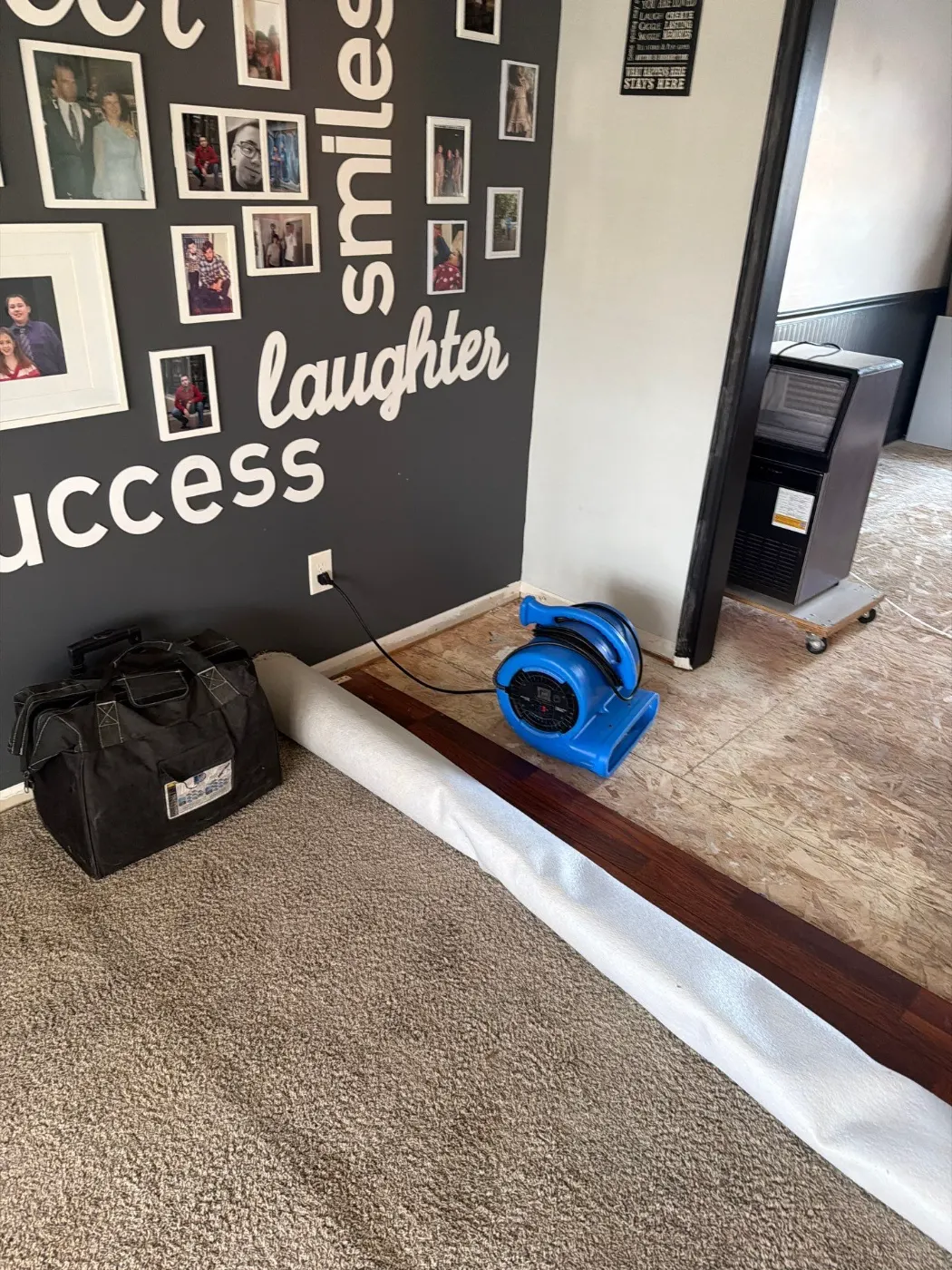
Water Restoration for Homes and Businesses in Sunblest Farms
When water is spreading through your Sunblest Farms home right now, Sunblest Farms Water Restoration delivers fast, around the clock emergency water damage restoration to stop the loss and start drying. Our IICRC certified crews handle every phase from extraction through reconstruction and coordinate directly with your insurance carrier.
If nobody picks up, we're likely helping another homeowner, and we'll call you back within 15 minutes.

Sunblest Farms Water Restoration delivers emergency water damage cleanup across Sunblest Farms and surrounding IN communities: same day water removal, verified structural drying, sewage and storm cleanup, and insurance claim documentation. Crews answer 24/7 at (765) 676-3491.
- Services: water damage restoration, basement flooding, sewage cleanup, storm damage
- Service area: Sunblest Farms, Hamilton County, IN and surrounding areas
- Response time: Same day for Sunblest Farms inquiries; 24/7 emergency service available
- Licensed and insured (License #RC21100059)
- Serving Sunblest Farms, IN since 2018
Schedule Your Free Damage Assessment
Inspections on Sunblest Farms homes start with a room by room walkthrough, because water travels further than the visible stain suggests. We take non penetrating meter readings on walls at multiple heights, then confirm hot spots with a penetrating meter. Baseboards, trim, subfloors, insulation in suspect cavities, behind cabinets and appliances, under sinks, around water heaters and washing machines, and the full basement perimeter and slab joints all get checked. A thermal imaging camera maps cool zones where moisture is hiding behind finished surfaces, and a hygrometer logs ambient temperature and humidity so drying targets are set against real conditions. The reason we go this deep on Sunblest Farms inspections is simple. The most expensive water damage problem is not the puddle you can see, it is the trapped moisture you cannot, the kind that quietly feeds mold colonies thirty days after the visible drying looks done.
I agree to be contacted by Sunblest Farms Water Restoration regarding my inquiry.
Water heater failures flood more Sunblest Farms utility rooms and basements than storms do. Forty or fifty gallons finds every low spot, soaks the drywall behind it, and runs under adjacent flooring. Same day water cleanup keeps a routine appliance failure from turning into a flooring replacement.
Antimicrobial treatment belongs in every category of water loss, and it's mandatory for gray and black water. Proper sewage cleanup in Sunblest Farms means containment, removal of contaminated porous materials, cleaning, sanitizing, and verification, in that order, with the right protective protocols throughout.
24/7 means answered, not answered eventually. Water emergencies across Sunblest Farms and Hamilton County reach a live person who can dispatch, day, night, weekend, or holiday. The clock that matters is yours, and it started when the water did.
Payment Options That Work for You
Your Sunblest Farms Water Restoration project lead will walk you through every financing option during the assessment, and every term is in writing.
Pay for your project at a later time, but lock in today's pricing. Ideal for homeowners waiting on insurance settlements.
- No payments for 12 months
- No interest if paid in full
- Lock in current pricing today
Divide your project cost equally across 12 months with zero interest. Most homeowners choose this option for predictable budgeting.
- Equal monthly payments
- 0% interest for 12 months
- Simple, predictable budgeting
Spread your investment over up to 20 years with fixed equal payments. The right choice for larger projects or homeowners who prefer lower monthly amounts.
- Up to 20-year terms available
- Fixed equal payments
- Ideal for larger restoration projects
Subject to credit approval. Ask your project lead for current terms and promotions.
Water Damage Restoration Services in Sunblest Farms
Every service below starts with finding where the water came from and measuring how far it spread.
Water Damage Restoration in Sunblest Farms
Serving Sunblest Farms: full water damage restoration for residential properties, including emergency extraction, structural drying, controlled demolition where needed, and reconstruction to pre loss condition.
Learn moreBasement Flooding in Sunblest Farms
For Sunblest Farms addresses, basement flooding response covering sump pump failure events, foundation water intrusion, and saturated finished basement materials, with extraction, drying, and rebuild.
Learn moreSewage Cleanup in Sunblest Farms
Serving Sunblest Farms: category 3 sewage cleanup with full containment, contaminated material removal, antimicrobial treatment, and structural drying performed under IICRC S500 and S520 protocols.
Learn moreStorm Damage in Sunblest Farms
In Sunblest Farms, storm driven water intrusion response, addressing wind driven rain entry, roof leaks into interior spaces, and saturated wall and ceiling assemblies after severe weather.
Learn moreCommercial Water Restoration in Sunblest Farms
For Sunblest Farms addresses, water damage restoration for commercial properties scaled to larger square footage, including coordination around business operations and after hours work where needed.
Learn moreCommercial Flood Damage Cleanup in Sunblest Farms
For Sunblest Farms addresses, commercial flood cleanup covering bulk water extraction, contaminated material handling, structural drying of larger building envelopes, and documentation for commercial claims.
Learn moreCommercial Sewage Cleanup in Sunblest Farms
Serving Sunblest Farms: commercial sewage cleanup with containment, regulated waste handling, antimicrobial treatment, and verification, addressing restroom backups, sewer mainline failures, and lift station overflows.
Learn moreCommercial Mold Remediation in Sunblest Farms
For Sunblest Farms addresses, commercial mold remediation performed under IICRC S520, including containment, HEPA filtration, contaminated material removal, antimicrobial application, and post remediation verification.
Learn moreCommercial Storm Damage in Sunblest Farms
In Sunblest Farms, commercial storm damage response handling water intrusion from severe weather, structural drying of commercial spaces, and coordination with property managers and insurance carriers.
Learn more
Local Expertise, Real Results
Restoration is the only work we do, and that focus is the reason Sunblest Farms homeowners get a crew that knows the protocol cold.
Sunblest Farms Water Restoration is the Sunblest Farms water restoration company that grew because the work was good, not because the marketing was loud. Indiana licensed, IICRC trained, locally based, and committed to the documentation rigor that gets claims approved and homes restored correctly the first time.
Sunblest Farms Water Restoration serves Sunblest Farms homeowners across Fishers and the wider Hamilton County area, dispatching crews to Sunblest Farms and surrounding pockets including Britton Ridge, Sweet Briar, and The Orchards at Sunblest. Restoration is the only work we do, which means every truck rolling toward your address is loaded for water mitigation, not split between unrelated trades. Our technicians are IICRC certified, our crew is licensed and insured, and the people on your property are employees, not our crew hired off a posting. For a panicked homeowner staring at a flooded basement, that consistency matters more than any pitch.
Every Sunblest Farms job follows the IICRC S500 standard for water damage restoration, and any mold work we perform is governed by the IICRC S520 standard. That looks like a documented moisture assessment using thermal imaging and penetrating meters, controlled extraction sized to the loss, structural drying with monitored air movement and dehumidification, antimicrobial application where contamination warrants it, and post drying verification before a single piece of drywall goes back up. The standards exist because water damage hides, and skipping a step on day three creates a mold call on day thirty. We work the protocol because it protects the home.
Our Promise
Three commitments to every Sunblest Farms homeowner who calls us. First, fast emergency response dispatched day or night, because every hour without extraction expands the damage into more materials. Second, IICRC certified technicians trained to the S500 standard handle the work, with credentials we can show you on site. Third, the initial inspection is free and carries no obligation, and if you have an active claim, we coordinate with your insurance carrier from documentation through scope approval.
What a Good Sunblest Farms Restoration Company Looks Like
IICRC certified technicians, documented scopes tied to industry standards, and pricing you see before the work starts, the way Sunblest Farms homeowners expect restoration to be done.
Fast Emergency Dispatch
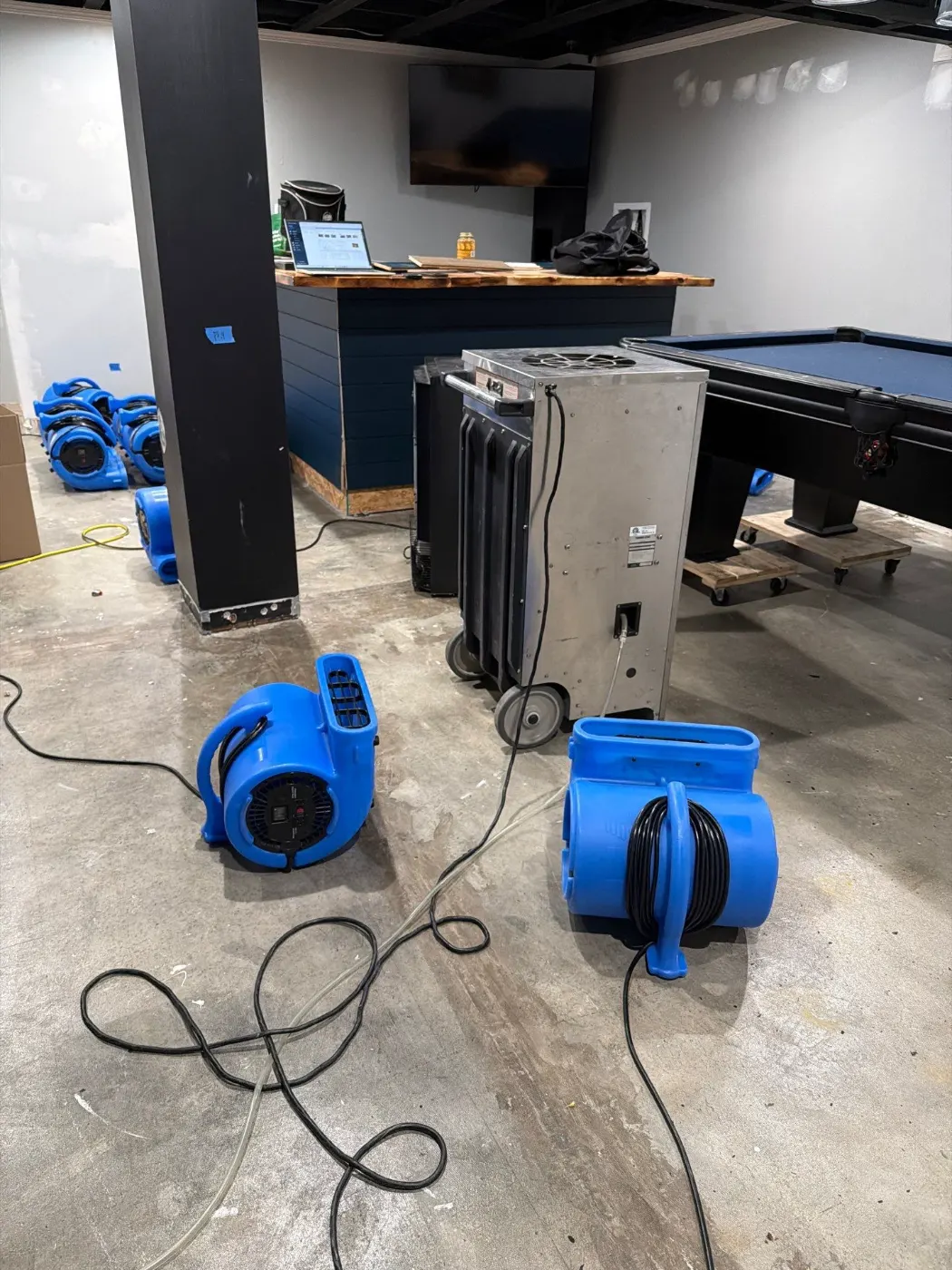
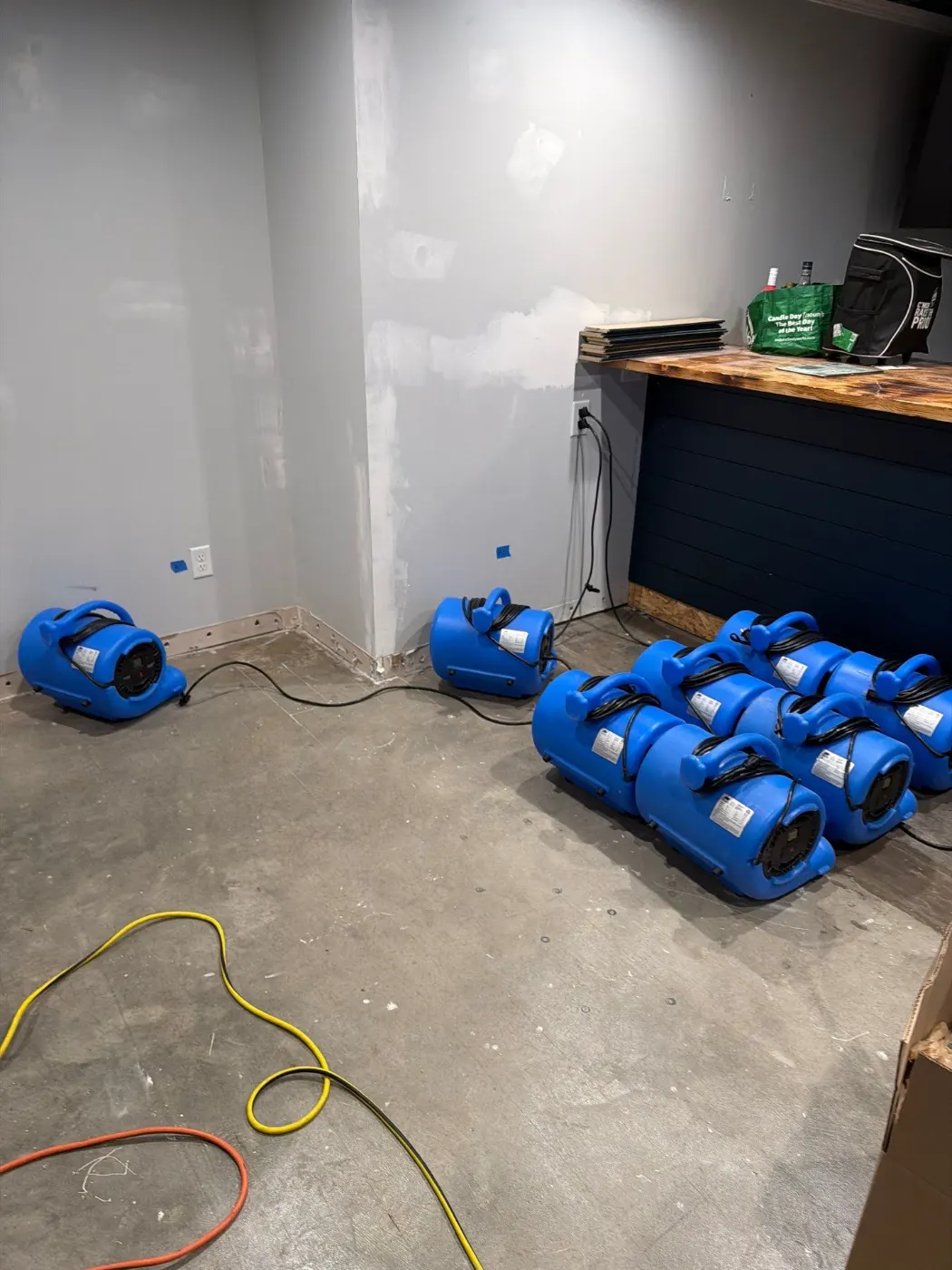
Water damage compounds by the hour, so our Sunblest Farms emergency line runs 24/7 with crews ready to roll out with extraction equipment, dehumidifiers, and air movers loaded and ready. A certified lead tech runs every dispatch. You get drying started, not a sales visit.
IICRC S500 Trained
Every technician on your job is trained to the IICRC S500 water damage standard, which dictates how Category 1, 2, and 3 losses are classified, contained, and dried. In practice that means meter readings logged, drying goals set against real moisture content, and verification before reconstruction begins, not guesswork.
Mitigation Through Rebuild
Most Sunblest Farms water damage jobs need more than drying. They need drywall hung, flooring replaced, trim reinstalled, paint matched. We handle the full scope from extraction through reconstruction, so you are not chasing a second contractor weeks after the dehumidifiers leave.
Insurance Coordination
We document the loss properly from the first walkthrough, photos, moisture maps, written scope tied to S500 protocol, so claims process cleanly. We work with your insurance carrier and your adjuster directly, translating restoration language into the line items they need to approve coverage.
Real Jobs. Real Results.
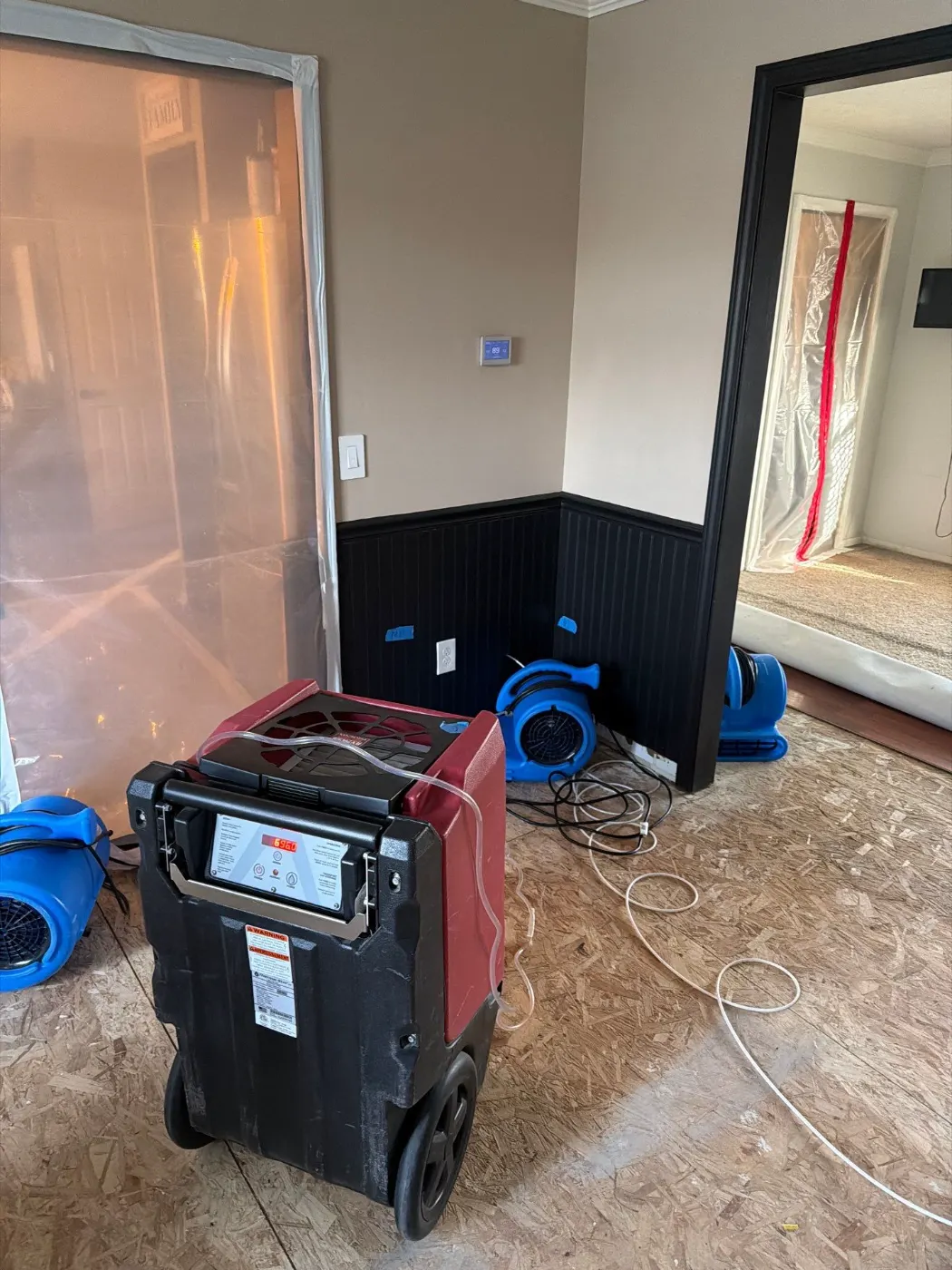
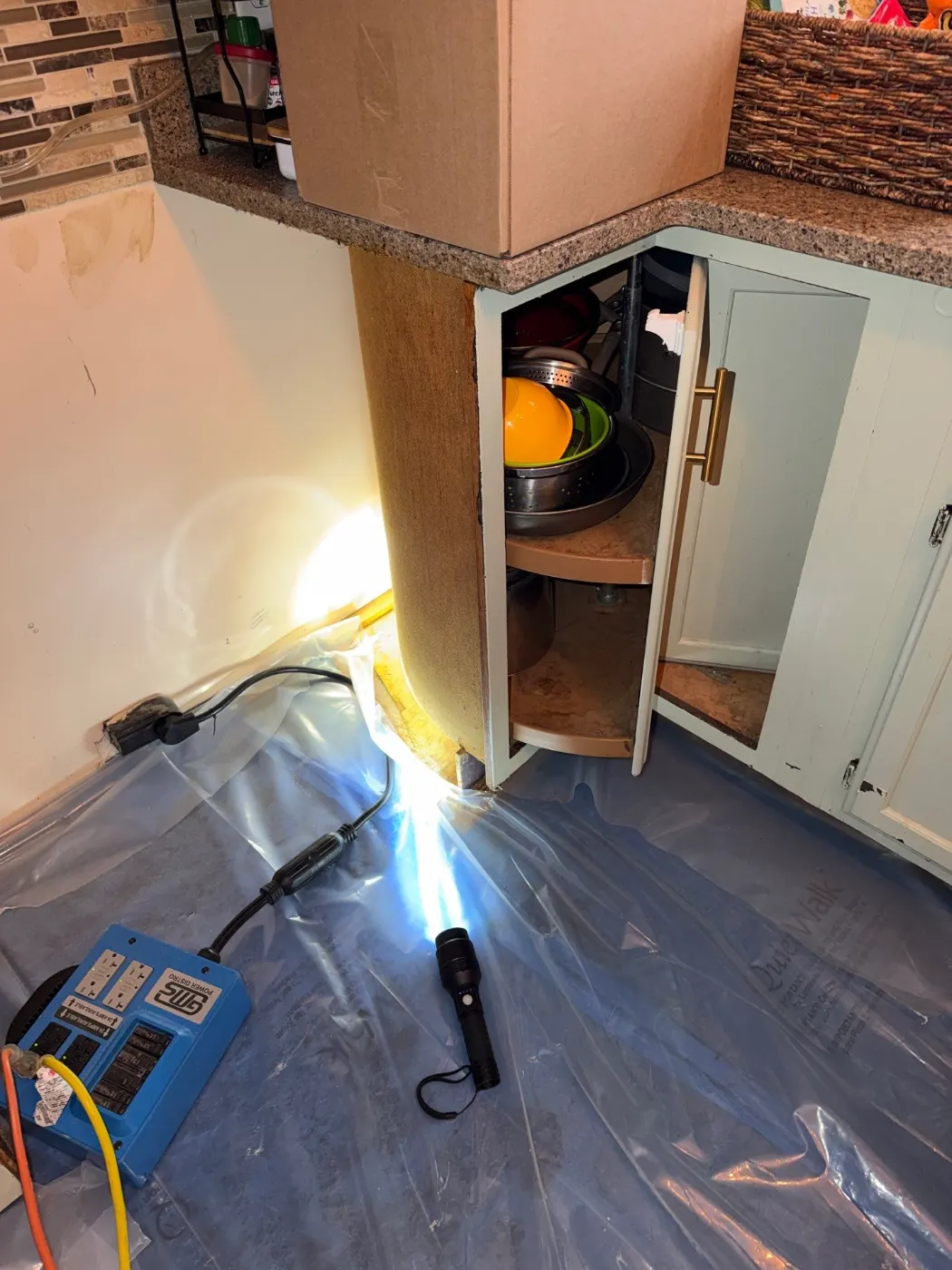
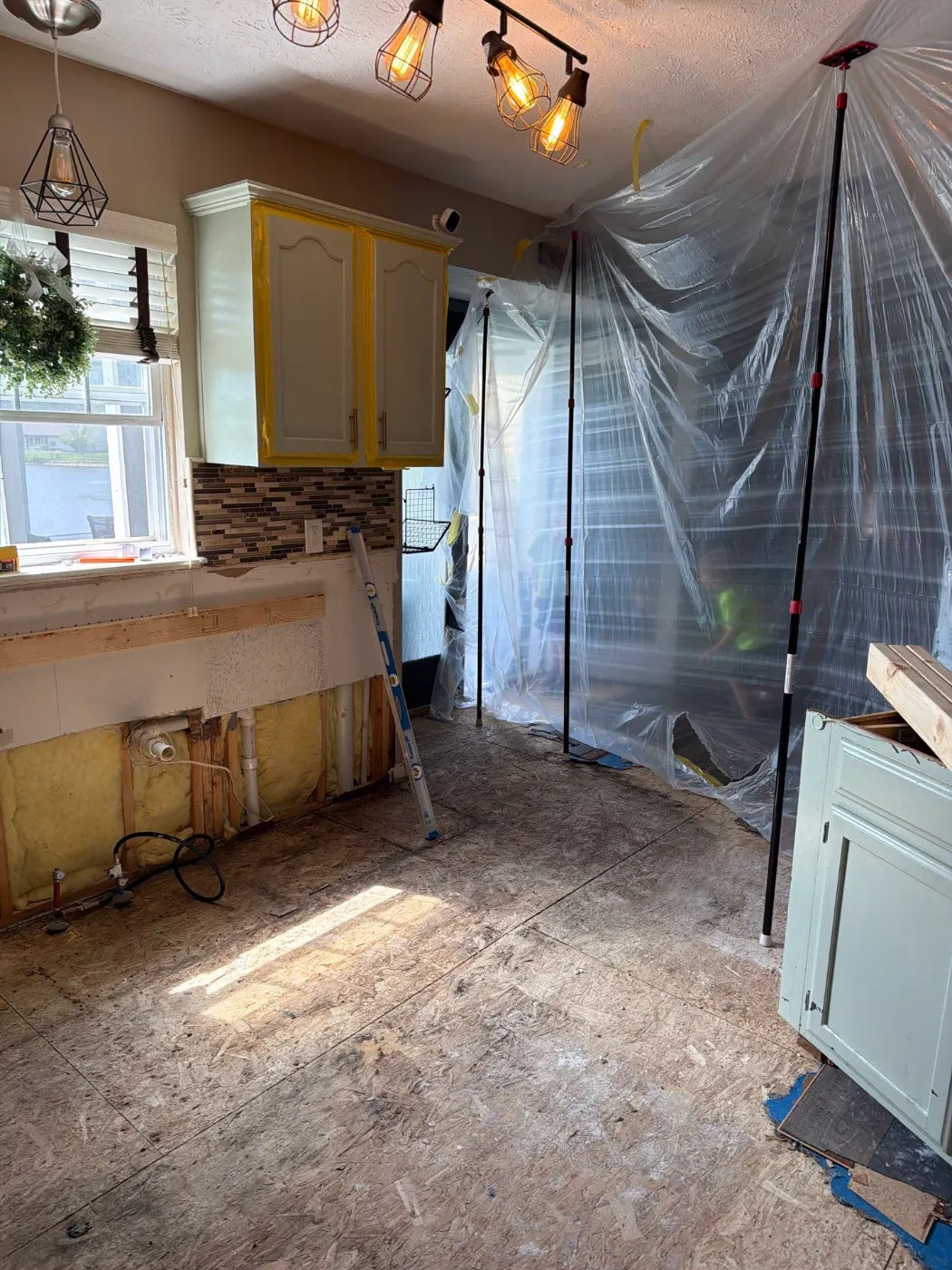
Real water damage restoration jobs completed across Sunblest Farms and the surrounding Hamilton County area, basement extractions, burst pipe rebuilds, sewage cleanups, and storm intrusion dry outs.
How We Get Your Sunblest Farms Home Dry
Step one in every Sunblest Farms job is moisture assessment and Category determination. We walk the loss with you, identify the source whether that is a burst supply line, a failed dishwasher hose, a sewage backup, or storm intrusion, and use thermal imaging plus meter readings to map how far the water has traveled. Then we classify the loss as Category 1, 2, or 3 under IICRC S500 because the Category sets the entire protocol that follows. This assessment phase usually runs one to two hours before any drying equipment is staged.
Step two is insurance coordination and documentation. Before mitigation starts, every affected area gets photo and video documentation, and the moisture map with logged meter readings becomes the written record of the loss. We contact your insurance adjuster, walk them through the scope, and tie our mitigation justification to industry standard language so the file moves. Most Sunblest Farms homeowners never see this paperwork because we handle it directly with the carrier, but it is the reason claims tend to settle without surprise denials on covered items.
Step three is drying execution and controlled reconstruction. Air movers and dehumidifiers are placed based on structural drying calculations, and we return daily to log readings until materials reach a verified dry standard, moisture content matched to unaffected reference materials elsewhere in the home. Controlled demolition happens only where materials cannot be saved. Then reconstruction begins, drywall, insulation, flooring, paint, trim, finished to return the space to pre loss condition. Every Sunblest Farms project moves through these phases in sequence, not in parallel shortcuts.
Rapid Dispatch
Calls to our 24/7 emergency line trigger a Sunblest Farms dispatch with extraction equipment, dehumidifiers, air movers, and meters already on the truck. A certified lead tech runs the crew on arrival. The goal is water out and drying staged on the same visit, not a return trip tomorrow.
Category Determination
We classify every loss as Category 1, 2, or 3 per the IICRC S500 protocol. Meter readings get logged, the source is documented, and a written assessment defines scope before any equipment runs. The Category dictates containment, PPE, and which materials can be dried versus removed.
Insurance Partnership
We work with your insurance carrier from the first walkthrough forward. Scope is justified against S500 language, photos and moisture maps support the file, and we communicate with your adjuster so coverage decisions are not delayed by missing documentation. We coordinate the claim, and we work with your insurance carrier.
Verified Dry Standard
Drying is not done when the surface feels dry. It is done when meter readings on affected materials match unaffected reference points in the home. We monitor daily, log the numbers, and confirm dry standard is hit before reconstruction begins, so hidden moisture does not become a mold call later.
Top Causes of Sunblest Farms Water Emergencies
Sunblest Farms homes typically call us about these six water damage scenarios.
Sink Drain and P-Trap Leaks
Under a kitchen or bath sink the joints are hand tight, the trap collects everything, and a slip nut backed off a quarter turn drips on every use. The cabinet floor swells, the base panel delaminates, and the wall behind it stays damp.
Ice Dam Meltwater in the Wall
Heat escaping the ceiling melts snow on the deck above, the meltwater runs to the cold eave, and it refreezes into a dam. Water backs up behind that ice and gets drawn under the shingles by capillary action, which is how a five year old roof leaks in February.
Appliance Failures
Dishwashers, washing machines, refrigerator ice maker lines, and water heaters fail without warning. Slow leaks behind appliances can run weeks before the wall behind them shows visible damage.
Window Well Overflow
Water entering at a basement window soaks the wall it runs down and the floor at the base of it. Carpet pad, bottom plate, and the drywall behind the baseboard all read wet, so drying starts by removing what holds moisture against the framing.
Washing Machine Hose Burst
Braided stainless hoses fail at the crimp and old black rubber ones fail down the middle. Either way it starts as a weep at the fitting and then opens. Replacing both hoses is a cheap Saturday; drying a laundry room and the room under it is not.
Refrigerator Ice Maker Line
That quarter inch line feeding the ice maker is the smallest supply in the house and the one nobody looks at. It gets pinched when the refrigerator slides back, then weeps behind the unit where nothing is visible until the flooring cups.
Found Water in Your Sunblest Farms Home? What to Do First
If you just found water in your Sunblest Farms home, shut it off at the source first and keep everyone away from anything electrical. Then go through the rest of these steps in order while our crew heads your way.
1. Find your main shutoff
In homes with a basement, the main shutoff is usually on the wall closest to the street. In homes without one, look in a utility closet or near the water heater. Close it and leave it closed until the leak is fixed.
2. Turn off power to wet rooms
Switch off the breakers for wet rooms only when you're standing somewhere dry and the panel is dry too. When the panel sits in a flooded basement, leave it alone and call your electric utility from upstairs.
3. Keep everyone on dry ground
Set up a spot in a dry part of the house for kids and pets while you work through this list. Floodwater and sewage both carry germs, and wet stairs and floors are easy to slip on.
4. Move what you can't replace
Carry keepsakes and important papers to a dry room upstairs. Then pick up anything sitting on a wet floor, starting with cardboard boxes and anything made of paper, since those soak up water quickly.
5. Protect wood floors and furniture
Wood soaks up water quickly, so wipe off what you can and set furniture legs on foil or small blocks. Pick up area rugs so the floor under them can start to dry, and roll heavy ones onto a dry surface.
6. Leave the record to us
You have enough to deal with in the first hour. Our crew documents the damage with photos and moisture readings as soon as we arrive, and we walk you through what we found once the work is underway.
7. Wipe down what you can
Wipe water off wood furniture and counters with dry towels, and set wet cushions on their sides so they drain while you wait for the crew. Keep the towels you use in a bucket or the tub so they don't soak another floor.
8. Make the call early
Waiting until morning gives the water all night to soak into floors and walls. Our line is open 24/7, so call once the water is shut off and everyone is safe.
The crew takes over from here, starting with photos and moisture readings, so call when you've done what you safely can.
Three Simple Steps
From the first phone call to the last moisture reading, every Sunblest Farms job follows the same three steps.
The Call That Starts It
Every emergency call gets a crew assigned and rolling within 2 hours. Gear is staged in advance, so extraction starts when the crew walks in.
The Moisture Map
Coverage questions get answered honestly, including the parts that are not covered. The map tells us what dries in place and what has to come out.
Verified Dry
Rebuild starts only after the drying is signed off. We do not pull equipment until the meters say dry, generally 3 to 5 days. The file closes with proof, not a promise.
How We Document Water Damage in Sunblest Farms Homes
The photo report is the record of your water loss. Our crew photographs every affected room and logs moisture readings as the work goes. Then we walk you through what we found, so you understand your home before you make any decisions.
The source, in pictures
Whether it was a cracked pipe or a sump pump that quit, the first photos in the report show the source up close and in the context of the room around it. That helps your plumber see the same thing we saw.
How far the water traveled
Water moves under flooring and up into drywall farther than it looks from the doorway. The crew checks walls and floors with moisture meters, and the report marks which areas read wet and which read dry.
Pictures from start to finish
Photos go into the report at each stage of the job, starting with the damage the crew found when they first walked in. By the end, you have a visual history of the room from wet to dry.
The plan for each room
Each room gets a short plan in the report, covering the equipment going in and anything that needs to come out. If the plan changes as the drying goes, the report changes with it.
Updates as the work goes
Drying takes several days in most homes, and the report grows the whole time. New readings and photos get added on each visit, so you always know where things stand in each room.
Questions are welcome
Ask about anything in the report that doesn't add up. The crew can take a new reading while you watch and explain what it means for that room, and seeing a dry wall next to a wet one makes the numbers easier to follow.
What to do with it next
With the report in hand, you can make your own decisions about the repair. We document damage with a photo report and walk you through what we found, so you can decide with your insurance company after you check your own policy.
Ask for your photo report at any point during the job, and we'll go over the latest readings with you.
What to Ask Before You Hire in Sunblest Farms
Clear answers to these questions make it easier to compare restoration companies in Sunblest Farms.
How will you show me it's dry?
Ask for moisture readings on the first visit and the last one, so you can see the numbers reach dry standard.
Can I see an itemized estimate?
Ask for every line item in writing. Many insurers price water losses in Xactimate, so an estimate in that format is easier for an adjuster to review.
Does my policy require a certain company?
Ask your adjuster before you sign anything, and read the work authorization so you know what you're agreeing to.
What happens if you find mold?
Ask how mold behind walls or under floors gets handled, and whether that work is priced apart from the drying.
Who handles repairs after drying?
Ask who replaces drywall, flooring, paint and trim once the structure is dry, and whether one company can do both stages.
Who will be working in my home?
Ask whether the crew works for the company you called or for a subcontractor, and who's in charge on site each day.
Indiana Weather Drives Restoration Calls Year Round
Indiana weather keeps Sunblest Farms restoration calls steady year round. Spring rain saturates clay heavy Hamilton County soil and overwhelms sump pumps, January cold snaps freeze and burst supply lines in exterior walls, and summer humidity feeds mold inside basements that were never fully dried after a small leak months earlier.
Spring Saturation Flooding
Hamilton County clay soils hold water rather than absorb it, and a heavy April rain on top of frozen ground pushes hydrostatic pressure against Sunblest Farms basement walls. Sump pumps run constantly, and when one fails or loses power, the basement takes on inches fast. We extract, dry the structure, and address saturated subfloor and drywall before mold sets in.
Winter Pipe Bursts
Central Indiana cold snaps drop temperatures hard, and uninsulated supply lines in garage walls, exterior cavities, and crawl spaces freeze, expand, and split. The leak often does not show until the thaw, when water has already run for hours. We respond to burst pipe calls across Hamilton County with extraction, structural drying, and reconstruction of the cavities opened to find the failure.
Severe Thunderstorms
Spring and summer thunderstorms hammer Sunblest Farms with wind driven rain and hail that finds every compromised seal around windows, vents, and flashings. Water entering wall cavities saturates insulation and drywall from the inside out. When you call us in, we map the hidden moisture with thermal imaging and dry the assemblies before the damage becomes structural.
Summer Humidity and Mold
Indiana summer humidity sits high for weeks, and unconditioned basement and crawl space air condenses on cool surfaces, feeding mold colonies on stored materials and joists. A small unaddressed leak from June can become a remediation job by August. We assess, contain, and remediate per the IICRC S520 standard when mold is found during a water damage inspection.
Where Our Trucks Go in Sunblest Farms
Choose a neighborhood to see what kind of homes it has and what that means if water gets inside.
Where we respond near Sunblest Farms
If you're in Sunblest Farms or one of the towns closest to it, a crew can be on the way at any hour.
Water Damage Risk in Sunblest Farms
What the Sunblest Farms area looks like from inside a water loss.
About Sunblest Farms Homes
Sunblest Farms homes were built predominantly between 1980 and 1991, with development beginning in 1975 when the Krimendahl family estate was sold for housing. Homes of this era typically feature copper supply plumbing, with galvanized steel drain lines possible in the earliest sections built in the late 1970s to early 1980s,both of which are now aging and prone to corrosion, pinhole leaks, and joint failures. The subdivision is characterized by detached single family homes, including ranch style and two story builds typical of the mid-1980s Midwest suburban boom, averaging approximately 1,800 sq ft. Homes of this build era in central Indiana commonly feature full or partial basements and attached garages, making basement water intrusion and sump pump reliance standard restoration concerns.
Where We Work in Sunblest Farms
We cover homeowners across Sunblest Farms near Holland Park (Fishers' largest park), Nickel Plate District Amphitheater, Fishers YMCA, New Britton Elementary School, Fishers Elementary School, Riverside Junior High School, Fishers High School, Allisonville Road and 116th Street intersection.
Surrounding Areas We Serve
Our crew also covers Britton Ridge, Cumberland Crossing, Sweet Briar, Sand Creek Woods, The Orchards at Sunblest, Sunblest Country View.
Recent Weather Patterns
The Fishers and Hamilton County area experiences regular spring thunderstorms, hail, summer straight line winds, and occasional tornadoes, all of which drive water intrusion events into aging 1980s housing stock. Snowmelt combined with heavy spring rain has historically overwhelmed local creeks and drainage infrastructure in Hamilton County, causing localized flooding; the City of Fishers actively manages floodplain risk near bodies of water including White River tributaries and Geist Reservoir, and operates a Stormwater Grant program to help property owners address private drainage failures.
What Our Crew Sees in Sunblest Farms
Sunblest Farms' housing stock, built largely between 1980 and 1991, carries meaningful plumbing failure risk: copper supply lines are now 35,45 years old and susceptible to pinhole leaks, while galvanized drain lines in the oldest sections can corrode and back up, creating sewage contaminated water damage events. Central Indiana's freeze thaw cycles,where temperatures swing sharply between January lows and spring warmth,put uninsulated exterior walls and garage adjacent supply lines at consistent burst pipe risk each winter. Full basements common to this construction era, combined with Hamilton County's clay heavy soils and the City of Fishers' documented groundwater variability, make sump pump failure during heavy rain events one of the most frequent sources of water damage calls dispatched to this neighborhood.
The Sunblest Farms Area
The broader Sunblest Farms area includes approximately 3,074 residents in the core neighborhood, with a median household income of approximately $105,092 and an average annual household income of $123,581, reflecting a stable, owner occupied, professional family community. Owner occupancy runs approximately 68.6%, meaning most water damage calls come from homeowners with direct financial stake in timely, thorough remediation.
Inside Water Restoration Work in Sunblest Farms
What we bring, what we seal off, and what we put back.
When an emergency call comes in from Sunblest Farms, the truck rolls with what the job actually needs. Commercial water extraction equipment for standing water, commercial dehumidifiers sized to the affected square footage, professional air movers for surface evaporation, moisture meters for readings, and thermal imaging to map hidden saturation. Extraction begins as soon as the source is controlled and the area is safe, and structural drying is staged the same day. Daily monitoring follows with logged readings on affected materials until dry standard is reached. Throughout, work zones are contained with plastic, unaffected areas are protected, and we tell you what is happening each day so the process is not a black box. This is the standard flow for Category 1 and Category 2 water damage restoration in Sunblest Farms homes.
Specialized containment applies when the water is Category 3, sewage backup, floodwater carrying outdoor contaminants, or long stagnant water with biological growth, and on any full mold remediation under IICRC S520. The work zone gets sealed with 6-mil plastic barriers floor to ceiling, entry points taped, and negative air machines run contained air through HEPA filtration before exhausting outside the structure. Technicians work in full PPE, Tyvek suits, N95 or P100 respirators per S520, nitrile gloves, and eye protection. Contaminated porous materials are cut, bagged at the containment, and disposed of as regulated waste. Remaining structure receives antimicrobial application, and where the scope warrants, post remediation verification includes air sampling. This is where IICRC certification matters most, because the corners cut on a Category 3 job become the long term health problem for the family living in the home.
Reconstruction is the phase where most water damage companies hand the job off to a separate general contractor, leaving the homeowner with two crews, two schedules, two billing cycles, and weeks of a home sitting in demolition between phases. We handle reconstruction as part of the same project. Drywall hung, taped, mudded, sanded, primed, and painted to match. Flooring replaced, whether that is carpet and pad, vinyl plank, hardwood refinish, or tile reset. Trim and baseboards reinstalled or replaced. Cabinetry repaired or replaced, doors rehung, electrical and plumbing finish work coordinated with licensed trades. One project manager runs the schedule from extraction through the final walk through, so the homeowner has one point of contact instead of three.
Living at Home During a Dry Out in Sunblest Farms
If you're staying home during the dry out, plan on steady fan noise and a visit from the crew each day to check the readings. Your routine outside the rooms that got wet can mostly stay the same.
Expect steady noise
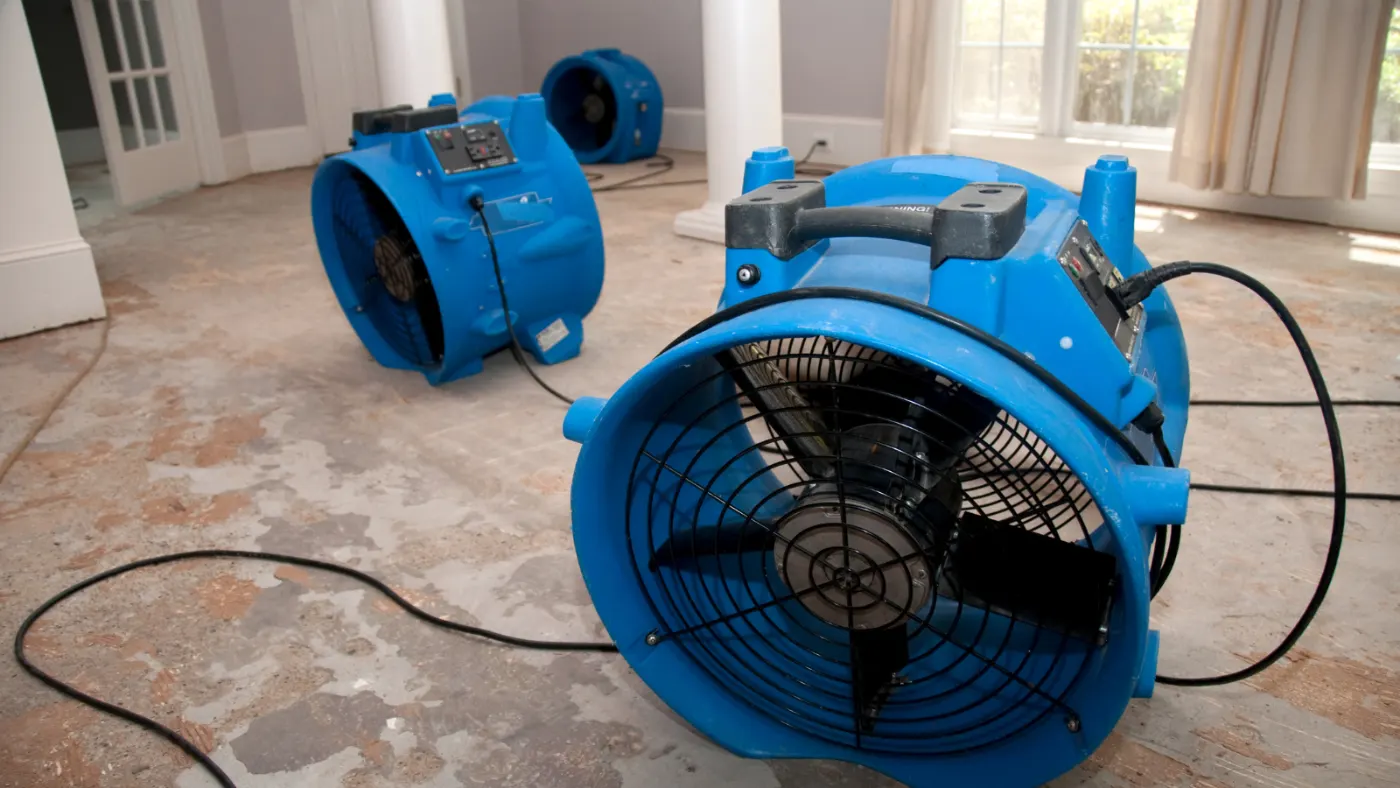
Air movers sound like strong box fans, and dehumidifiers add a low hum. A closed door between a bedroom and the equipment helps at night, and the crew can sometimes angle a unit away from a bedroom wall if the noise carries.
Keep everything plugged in
Turning the equipment off slows the drying and can add days to the job. If the noise is a problem at night, call us and the crew will look at the setup with you on their next visit.
Closed doors help
When the crew closes off a room, the equipment dries a smaller space faster. Keep those doors shut as much as you can, and pass through quickly when you need to get in.
Your electric bill
Running several machines for days will raise your electric bill for that month, and that's a normal part of drying a home. The crew removes each unit as soon as the readings say its area is dry.
Plastic walls stay up
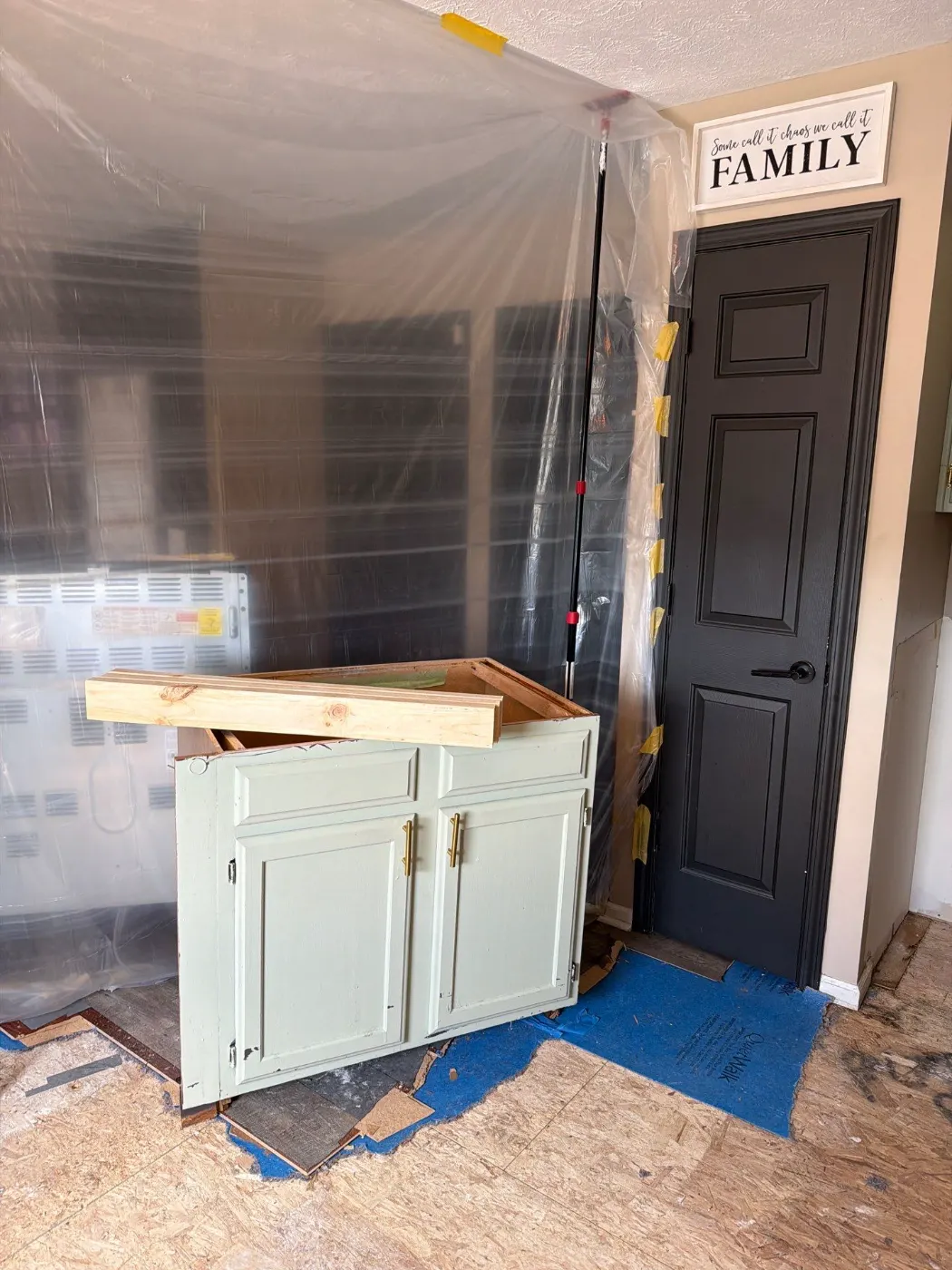
If the crew hangs plastic sheeting to close off part of a room, it's there to keep dust and moisture contained. Leave the zipper doors closed, and keep curious pets from scratching at the plastic.
What the daily check covers
On each visit the crew takes new moisture readings in the same spots as before and moves or removes equipment based on what the numbers show. Those readings go into your photo report, so you can see the change from one day to the next.
Keeping moisture down
EPA puts it this way: the key to mold control is moisture control. In practice that means drying your home quickly and keeping the humidity down once the equipment is gone.
What happens after drying
Once everything reads dry, the crew pulls the equipment and you get the final readings in your photo report. Any drywall or flooring that came out can be put back after that, and the crew will talk through the rebuild with you.
Call us with any question about the equipment, and we'll help you sort it out over the phone or on the next visit.
Water damage response pricing in Sunblest Farms
Sunblest Farms water damage projects vary by Category, square footage, and reconstruction scope, so the ranges below are starting points. Every job begins with a free on site inspection that determines the actual scope and final pricing before any work is authorized.
Common Questions About Sunblest Farms Water Damage
Straight answers to the questions Sunblest Farms homeowners ask most.
Expert Sunblest Farms Restoration Crews Available Now
If water is spreading through your Sunblest Farms home right now, or you suspect hidden moisture after a recent storm or pipe failure, call our 24/7 emergency line for fast dispatch. The on site inspection is free, there is no obligation, and we coordinate directly with your insurance carrier.